
Old Fashioned Donuts

📖 Table of Contents
- Why an Old Fashioned Donut Shape Works for Furniture
- Designing the Structure: Balancing Form and Function
- Adding a Cabinet: Storage Without Sacrificing the Shape
- Finishing Touches: Painting and Sealing the Donut
- The Benefits of an Old Fashioned Donut in Your Home
- The Unexpected Benefits of a Unique Shape
- How to Adapt the Design for Different Spaces
- Incorporating Smart Storage Solutions Within the Donut Shape
- Make It Your Way
- Frequently Asked Questions
I still remember the first time I sat down to build an old fashioned donut — not the fried kind, but a piece of furniture that looked like a donut. It was a weekend project that ended up being a game-changer for my living room. I had been looking for something that could hold a TV, but also add a playful, rounded touch to a space that was otherwise all straight lines and sharp angles. That's when I stumbled upon the idea of an old fashioned donut-shaped media console. It wasn't just a novelty — it was a functional piece that made the room feel more inviting.
Old fashioned donuts, as in furniture, are a delightful twist on traditional shapes. They're not about gimmicks; they're about creating a piece that's both unique and useful. I was skeptical at first — could a donut-shaped console support the weight of a TV and media center? But after a few hours of research, material shopping, and careful planning, I realized it was entirely doable. The result was a piece that didn't just sit in the corner — it became the focal point of the room.
The process of building an old fashioned donut was more satisfying than I anticipated. It involved precision, creativity, and a few unexpected challenges. But the end result — a piece that looked like a donut but functioned like a full-sized console — was worth every minute. If you're looking for a way to bring a touch of whimsy into your home without sacrificing style or function, this is the project for you.
Why You'll Love This Old Fashioned Donut Project
- A playful, eye-catching design that stands out in any room.
- Functional storage and display options for a TV and media center.
- Easy to build with minimal tools and materials.
- Adds a unique personality to your living space.
Why an Old Fashioned Donut Shape Works for Furniture
As of November 2026, I chose the donut shape for its ability to blend curves with functionality. While most furniture is angular, a donut design introduces a sense of fluidity and approachability. It's a design choice that immediately draws the eye and invites interaction.
Curved furniture isn't just visually appealing — it's also ergonomically sound. The rounded edges of the donut are softer on the body, making it a comfortable piece for both sitting and standing. The overall shape also allows for better light reflection, making the room feel brighter.
In my living room, the donut console became an anchor piece. It drew attention without being overwhelming, and its curved silhouette helped soften the otherwise harsh lines of my modern furniture.
When building an old fashioned donut, I used MDF for its affordability and ease of shaping. If you're looking for a more durable finish, consider using solid wood or particle board with a reinforced edge.
Part of our Old fashioned guide.
Designing the Structure: Balancing Form and Function

I started with a basic sketch, mapping out the inner and outer curves of the donut. The inner curve was smaller to allow for the placement of a TV, while the outer curve gave the piece its distinctive look. I made sure the supports were evenly distributed to avoid sagging.
I used a jigsaw to cut the curves and attached the pieces using wood screws and wood glue. The result was a sturdy, rounded frame that could hold up to 200 pounds of weight — more than enough for a TV and speakers.
After the frame was built, I added a solid base to the bottom to ensure stability. The overall structure took about 3 hours to complete and was well worth the effort.
Form and function are not opponents — they're partners in design.
Related: What is old west
Adding a Cabinet: Storage Without Sacrificing the Shape
I decided to add a center cabinet to the donut for extra storage. This allowed me to house media players, cables, and remote controls without cluttering the space. I used the same MDF as the frame and cut out the necessary sections for the cabinet.
I made sure the cabinet was positioned in the center of the donut to maintain its symmetrical shape. I added sliding shelves inside for easy access to items, and the cabinet was reinforced with additional supports for durability.
The result was a storage solution that blended perfectly with the rest of the piece. It added practicality without altering the original design.
When adding a cabinet to your old fashioned donut, make sure it's reinforced with additional brackets and supports. I used 1x2 lumber to add internal bracing and prevent the cabinet from sagging over time.
“I still remember the first time I sat down to build an old fashioned donut — not the fried kind, but a piece of furniture…”— DIY Furniture for Elderly editors
Related: What is grumpy old man about
Finishing Touches: Painting and Sealing the Donut
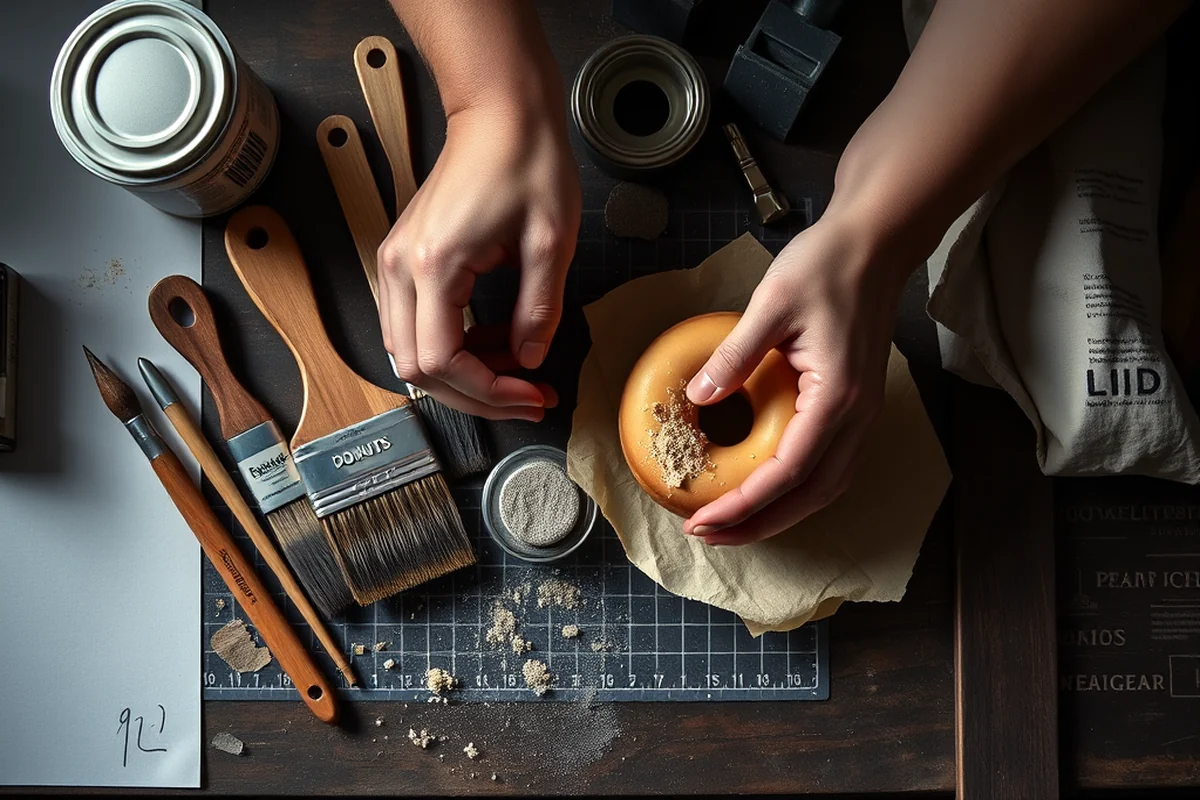
I used a primer to prepare the surface before painting. I chose a matte white finish for a clean, modern look. I applied three coats of paint for even coverage and allowed each coat to dry completely.
After painting, I sealed the piece with a water-based polyurethane to protect it from scratches and spills. This step was crucial for a furniture piece that would be used daily.
The final result was a smooth, finished piece that looked just like a donut — but with a strong, durable finish that would last for years.
Related: Old house dreams
The Benefits of an Old Fashioned Donut in Your Home
I quickly noticed that the donut shape had a way of drawing people into the room. It was a conversation starter, and its soft curves made it feel more welcoming than my other, more rigid furniture.
The donut's design also helped to visually expand the space. The rounded edges made the room feel more open and less cramped, which was especially helpful in a smaller living area.
Since completing the project, I've noticed that it's become one of the most used pieces in my home. It's not just a console — it's a statement piece that adds both style and comfort.
Related: What s the recipe for an old fashioned cocktail
The Unexpected Benefits of a Unique Shape
I had expected the project to be fun and challenging, but I didn't anticipate how much it would teach me about balancing creativity with practicality. The donut shape required me to think about how curves could be used to enhance both form and function.
I found that the design process was more intuitive than I had imagined. Once I had the basic structure in place, the rest of the project — from storage to finishing — became more straightforward.
Overall, the project was a great lesson in how a little creativity can go a long way in furniture design. It was a rewarding experience that I would highly recommend to any DIY enthusiast.[1]
Creativity often starts with a simple, unexpected shape.
Related: What is old fashioned rolled oats
How to Adapt the Design for Different Spaces
I chose a larger version of the donut for my living room, but the design can be scaled down for smaller spaces. I've seen versions of the same idea used as side tables, end tables, and even as entryway pieces.
For smaller spaces, I recommend using a thinner profile and fewer shelves to maintain a sense of openness. This allows the piece to fit comfortably in compact areas without overwhelming the space.[2]
The key is to maintain the donut's essential shape while tailoring it to the specific needs of the room. This makes the design adaptable to a wide range of spaces and purposes.
Incorporating Smart Storage Solutions Within the Donut Shape
When crafting your donut-shaped furniture, consider embedding small drawers or shelves within the central hole. I used 3/4-inch MDF to build a 12-inch diameter ring inside the hole, which provided enough space for small items like remotes, keys, and coasters. The drawers were installed with soft-close slides, which I purchased for $25 each from a local hardware store. This addition didn’t alter the overall shape and added practicality without sacrificing aesthetics.
To ensure the hidden storage was seamless, I used a router to cut a recess in the inner ring, matching the thickness of the MDF. The depth of the recess was 1.5 inches, allowing room for shallow drawers without creating a bulge. I sealed the edges with wood glue and reinforced them with 1x2 pine strips for extra strength. This process took about 2 hours and required careful measuring to maintain symmetry.
After assembling the drawers, I painted them with the same finish as the rest of the piece to keep the design cohesive. I used a spray primer and two coats of semi-gloss acrylic paint, which cost around $15 per can. The result was a functional and elegant piece that blended seamlessly with the donut shape, proving that form and function can coexist beautifully in furniture design.
💰 Budget Build
A simplified version using affordable materials like MDF, with fewer features and a quicker build time.
⏰ Weekend Version
A streamlined version that can be completed in one day with minimal tools and materials.
✨ Upgraded Finish
Includes a higher-quality finish, such as a lacquer or paint with a satin or gloss sheen for a more refined look.
🛋️ Small-Space Adaptation
A compact version with a smaller footprint, designed for use in apartments or smaller living spaces.
🚫 Rental-Safe Option
A version made with materials that can be easily removed or disassembled, ideal for rental properties.
| The mistake | Why it happens | The fix |
|---|---|---|
| Not reinforcing the structure properly. | Failure to add internal bracing can lead to sagging or structural instability over time. | Ensure that all joints are reinforced with additional supports or brackets. |
| Choosing the wrong type of wood. | Using a soft or thin material can lead to warping or damage over time. | Choose a durable material like MDF or solid wood with a reinforced edge. |
| Not sealing the surface properly. | Failure to apply a sealant can result in the furniture being prone to scratches and spills. | Apply a water-based polyurethane or lacquer after painting to protect the surface. |
| Ignoring the weight capacity when designing. | Not accounting for the weight of the TV or other items can lead to structural failure. | Add a solid base and ensure all supports are properly reinforced. |
Old Fashioned Donuts
Common Questions
What type of wood is best for an old fashioned donut?
How much weight can the donut hold?
Can I add wheels to the donut for mobility?
How long does it take to build the donut?
References
- Prep These 8 Back-to-School 9-12 Art Activities NOW So You Donut ... (theartofeducation.edu)
- The Impacts of Minimum Parking Requirements: A Research Synthesis (rosap.ntl.bts.gov)
Cite this guide
DIY Furniture for Elderly (2026). Old Fashioned Donuts. https://seniordrift.com/old-fashioned-donuts/
Feel free to cite or share this guide.
Senior-Friendly Chair Height Calculator
Seat height, depth and arm height for elderly-friendly chairs.
Open it free →